
Backflow testing is a detailed and regulated process designed to ensure your backflow prevention device is functioning correctly. In Idaho Falls and Ammon, this testing is required annually for many residential and commercial properties.
We perform backflow testing using certified procedures and specialized equipment to make sure your system is safe, compliant, and ready for use.
What Is Being Tested During Backflow Testing?
Backflow testing focuses on the performance of your backflow prevention device. This device is responsible for stopping contaminated water from reversing into the clean water supply.
During testing, we evaluate:
- Internal valves and seals
- Pressure levels within the device
- Proper operation under simulated conditions
- Overall system integrity
The goal is simple. Confirm that water can only flow in one direction and that your system meets all safety standards.
Step 1: Locate and Inspect the Backflow Device
The first step in backflow testing is identifying the location and type of device installed on your property.
Most devices are found:
- Near irrigation system connections
- Outside the home or building
- In utility or mechanical areas
We begin with a visual inspection to check for:
- Visible damage or corrosion
- Leaks or worn components
- Proper installation
This step helps identify any immediate issues before testing begins.
Step 2: Shut Off the Water Supply
Before testing can begin, the water supply to the system must be temporarily shut off. This allows us to safely evaluate the device without interference from active water flow.
Shutting off the system:
- Prevents inaccurate readings
- Protects the integrity of the test
- Ensures technician safety
This step is brief and controlled to minimize disruption.
Step 3: Connect Specialized Testing Equipment
Backflow testing requires calibrated gauges designed to measure pressure differences within the device.
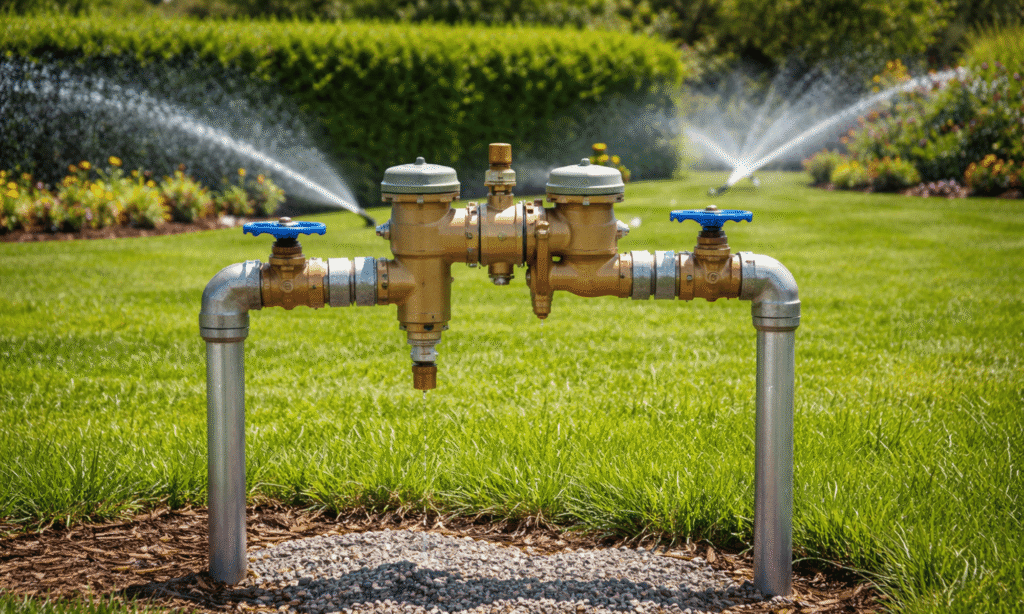
We attach testing equipment to designated ports on the backflow assembly. These gauges allow us to:
- Measure pressure across internal valves
- Detect leaks or failures
- Verify proper operation
The American Water Works Association sets standards for testing procedures and equipment used in backflow prevention systems.
Step 4: Test Each Valve Independently
Backflow prevention devices contain multiple internal valves. Each valve must function correctly to prevent reverse flow.
During this step, we:
- Test pressure levels across each valve
- Confirm valves close properly
- Check for pressure drops that indicate failure
If any valve does not meet required pressure thresholds, the device will not pass testing.
Step 5: Evaluate Test Results
Once all measurements are complete, we analyze the results to determine whether the device passes or fails.
If the Device Passes
- Your system is certified for the year
- Documentation is completed and submitted if required
- Your water system is considered safe and compliant
If the Device Fails
- Repairs or replacement may be needed
- The device must be retested after corrections
- Compliance cannot be achieved until the issue is fixed
According to the U.S. Environmental Protection Agency, regular testing and maintenance of backflow devices are essential to prevent contamination in public water systems: https://www.epa.gov/dwreginfo/cross-connection-control-manual
Step 6: Restore Water Service
After testing is complete, we carefully restore water flow to your system.
We ensure:
- All valves are returned to normal operation
- The system is functioning properly
- There are no leaks or issues
This final step ensures your system is ready for normal use.
How Long Does Backflow Testing Take?
Most backflow tests take between 20 and 40 minutes, depending on:
- The type of device
- Accessibility
- System condition
For most homeowners in Idaho Falls and Ammon, the process is quick and minimally disruptive.
What Equipment Is Used in Backflow Testing?
Backflow testing requires precise tools to ensure accurate results.
Common equipment includes:
- Differential pressure gauges
- Test kits calibrated to industry standards
- Valve keys and adapters
These tools allow certified testers to perform accurate and reliable inspections.
Why Professional Backflow Testing Matters
Backflow testing is not a DIY task. It requires certification, training, and specialized equipment.
Working with a certified professional ensures:
- Accurate testing results
- Compliance with local regulations
- Proper documentation submission
- Identification of potential issues early
Improper testing can lead to false results, which may put your water supply at risk.
Schedule Backflow Testing in Idaho Falls and Ammon
Understanding how backflow testing works helps you see why it is such an important service.
We make the process simple, efficient, and fully compliant with local requirements.
Call us today to schedule your backflow testing service in Idaho Falls or Ammon. You can also visit our Contact Us page to request an appointment online.